Abolitionist Assemblies #3: On Time
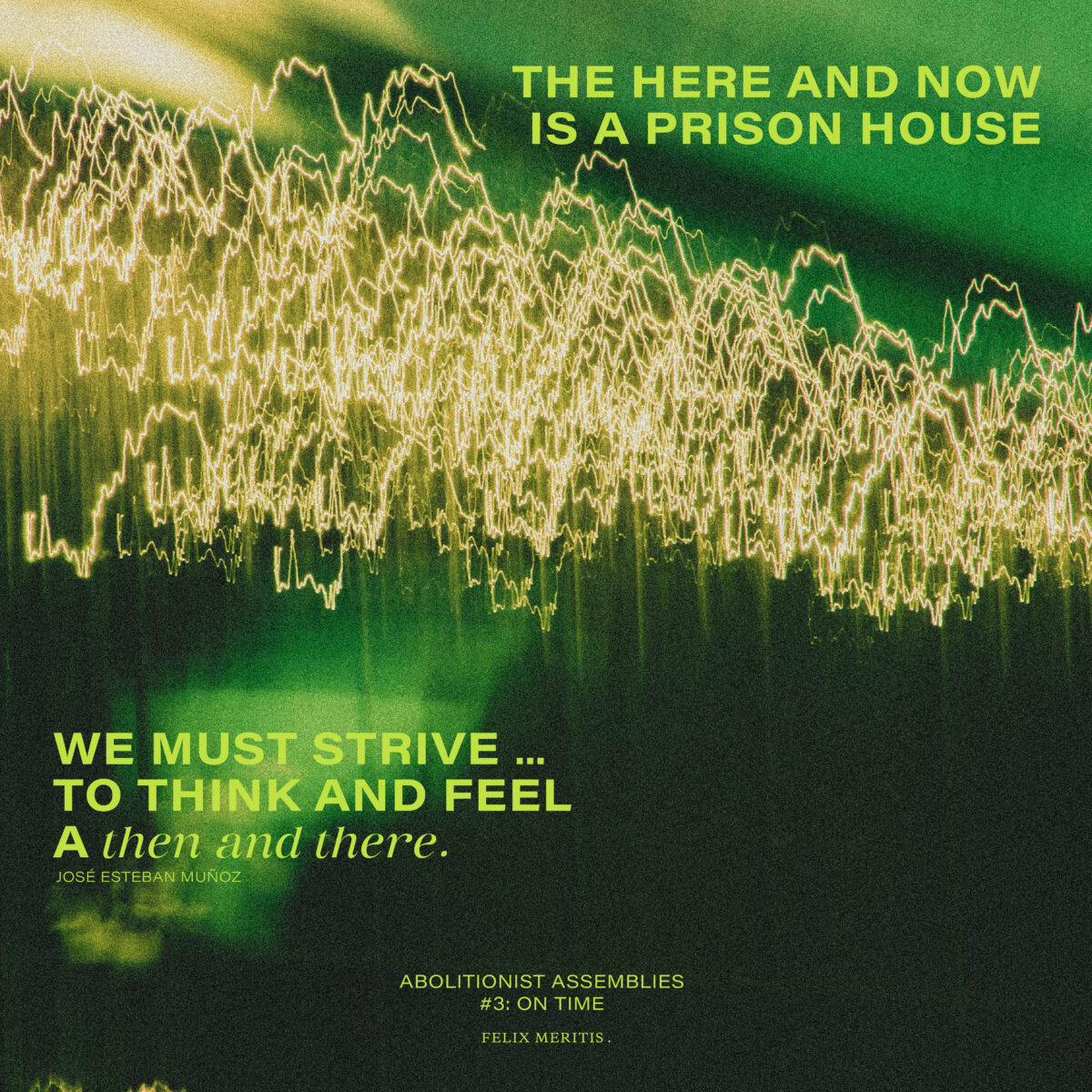
The Abolitionist Assemblies return with a unique edition exploring what happens if we refuse to trust the clock and begin to imagine life beyond it. Inspired by the work of a broad lineage of Black, queer, crip, quantum futuristic and abolitionist thinkers, we catch a glimpse of what becomes possible when dominant ideas of time begin to fall apart. Join us on March 19th to explore this together through talks, performances, film and literature.
We were told that history moves forward, but we seem to be moving in troubling cycles. Hard-won rights are rolled back, borders are hardening, and time itself is tightening around the same bodies, again and again. What does this sense of repetition tell us about time? Expect moments of looping, interruption, speculation, and pause, with contributions by transdisciplinary artist Isaiah Lopaz, xenologist Adriana Knouf, author Tieka Masfar, spoken word artist Mathieu Charles, and more.
Inspired by abolitionist thinkers such as Ruth Wilson Gilmore and Sophie Lewis, Abolitionist Assemblies is a series of visionary gatherings where we build radical alternatives to current exploitative systems. Departing from the premise that the “white-supremacist capitalist patriarchy” (hooks) continues to inform current politics, culture, and society, we use abolitionist thinking to critically interrogate the sanctity of borders, prisons, schooling, gender, the family, and more. This edition On Time is our third edition, inviting both guests and audience to intervene with the widely accepted conception of Time.
Line-up

Isaiah Lopaz
Born in Tovangaar in 1979, Isaiah Lopaz is an artist whose practice spans writing, collage, performance, and curation. Drawing on his family’s lineage, his work traces intersections of African, Creole, First Nations, European, British, and American histories, approaching ancestry as both archive and speculative method. Lopaz will join us with a participatory installation engaging Black and Queer quantum thought, exploring entanglement, non-linear time, and ancestral presence as poetic and theoretical frameworks.
In 2024, Lopaz founded Black Visual Grammar, a mobile cultural program that archives Black perspectives through collage-making workshops and exhibition practices.
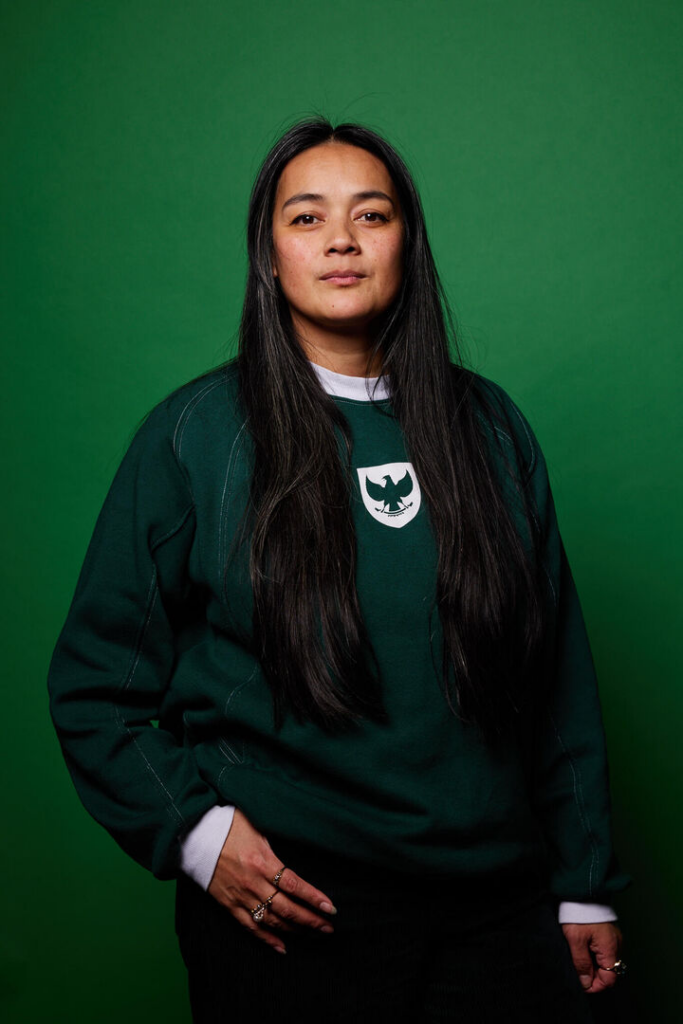
Tieka Masfar
Tieka Masfar is a poet, performer, and author of the children’s book Louis Paraplouis. Her work explores alternative ways of experiencing time \ beyond clocks, schedules, and linear agendas \ imagining time as an energy that draws people together at the right moment. Across poetry, spoken word, performance, and educational projects, she works with rhythm, pause, and presence to question dominant ideas of productivity and progress, and to create space for care, attention, and connection.
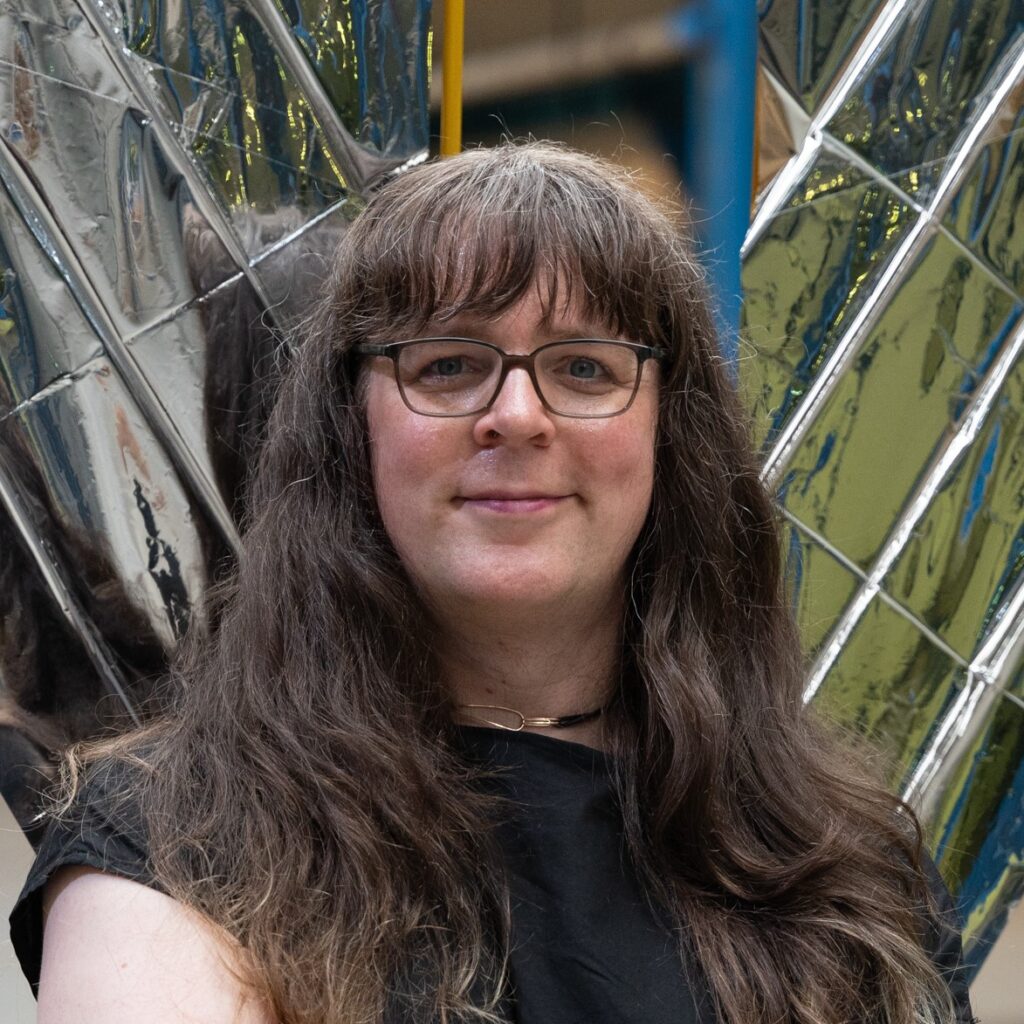
Adriana Knouf
Adriana Knouf, PhD works as an artist, writer, and xenologist, focusing on topics such as wet media, space art, and queer and trans futurities. She is the Founding Facilitator of the tranxxenolab, a nomadic artistic research laboratory that promotes entanglements among entities trans and xeno. Adriana regularly presents her artistic research around the world and beyond. Her work has been recognized by an Award of Distinction at Prix Ars Electronica (2021), an Honorary Mention from the Science Fiction Research Association’s Innovative Research Award, and as a prize winner in The Lake’s Works for Radio #4 (2020).
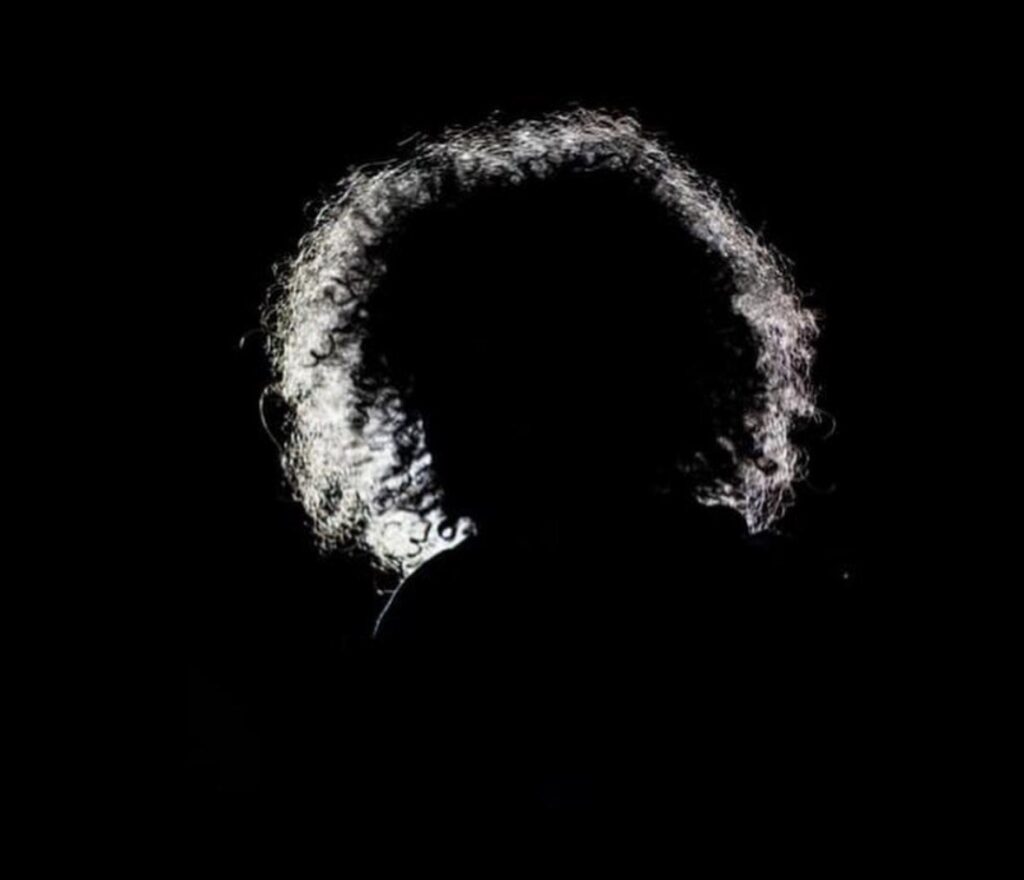
Mathieu Charles
Mathieu Charles is a multidisciplinary artist, researcher, and curator whose work focuses on anti-colonial narratives, performance, and institutional power. His practice combines artistic and theoretical approaches to examine structures of power, resistance, and collective memory. Moving between theater, literature, and academic research, his work pays particular attention to archives, activism, and artistic expression.

Koray Comert
Koray Comert, moderator of the evening, is an activist, screenwriter, and rapper. He was raised within the ethos of hip hop: build collective power to fight exploitation and remain true to oneself. With a deep engagement in Socialist Realism, Comert translates lessons from past revolutions into contemporary artistic practice. As the founder of Art for the People, a collective of anti-capitalist artists, he has organized political education sessions for artists in Miami in recent years.
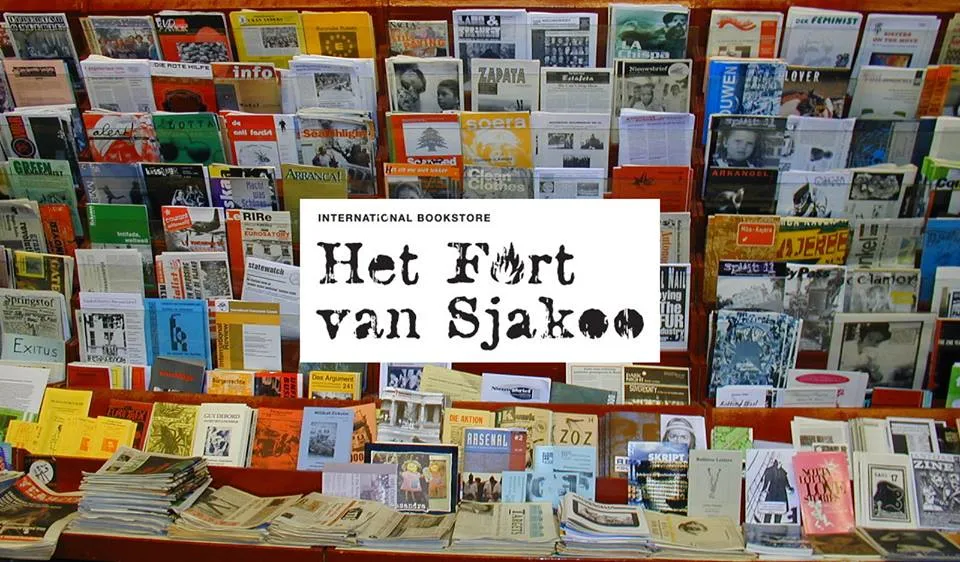
Fort van Sjakoo pop-up
Bookstore Fort van Sjakoo has been a fixture in the heart of Amsterdam since 1977. It began in a squatted live-work space, resisting a planned highway through the Nieuwmarkt neighborhood, and was officially legalized in 1988. The Fort is run by a collective of volunteers and specializes in radical leftist and socially critical literature. As always, a pop-up Fort will join our assembly with essential readings.
Film
Mulika (2022, 14 minutes) by Maisha Maene
An “afronaut” emerges from the wreck of his rocket in the volcanic crater of Mount Nyiragongo: he is a traveller in space and time who has come to protect humanity. As he goes down into the city, he meets the people in today’s Goma and starts to understand what he must to do to change the future of his people
Emma-Lee Amponsah is a writer, researcher, and curator working across experimental film, social sciences, and media. At Felix Meritis, she curates interdisciplinary programs on abolition, community, and speculative futures. Her program portfolio includes long-term series such as the Abolitionist Assemblies and If You Are a Big Tree, alongside one-off programs like Dreams We Practice, featuring Ruha Benjamin, and De Toekomst Werkt Niet.
Would you like to attend this program, but don’t have the means to pay for a ticket? Send an email to info@felixmeritis.nl, we can work something out.